
 posted by: heuchadmin
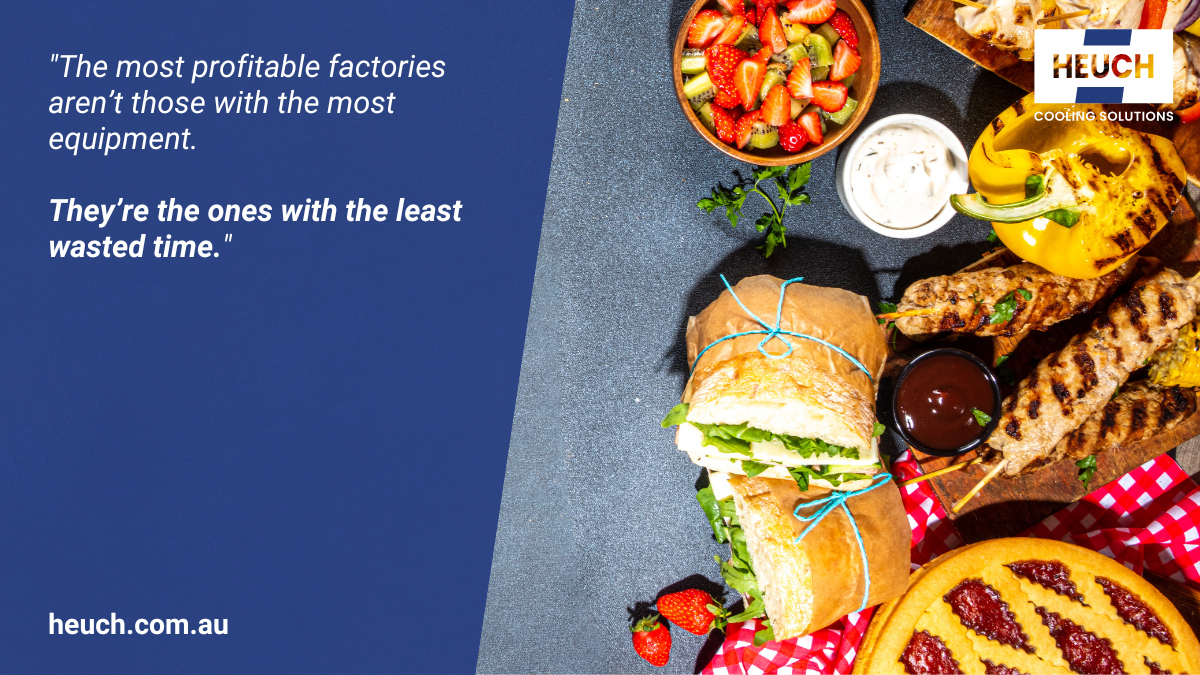
 “The most profitable processing sites aren’t those with the most equipment. They’re the ones with the least wasted time.”
Most bakeries and food manufacturers don’t lose profit because of bad recipes. They lose it in the waiting, the idle minutes where products cool before the next stage.
Cooling is one of the most overlooked levers for improving production efficiency and profitability. It influences throughput, labour utilisation, floor space, food safety, product quality – and ultimately, margin.
For decades, the industry has relied on ambient cooling rooms, fans, blast chillers and cooling tunnels. But across Europe and in advanced food manufacturing facilities worldwide, the new benchmark for speed and process efficiency is vacuum cooling.

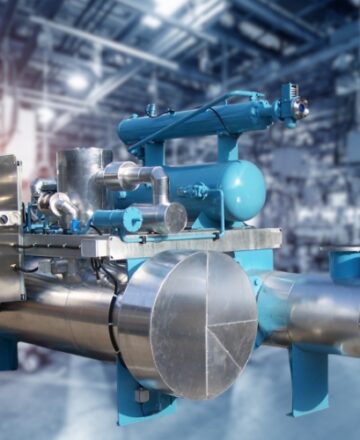
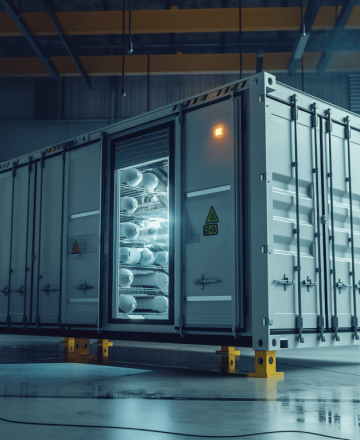
Vacuum cooling works by lowering the pressure inside a sealed chamber. As pressure drops, water in the product evaporates at a much lower temperature, a rapid process that removes heat extremely efficiently.
In practice, this means products that once needed nearly an hour to cool can now reach the same temperature in a fraction of the time.
For example, a product exiting the oven at 80°C and needing to cool to 25°C might take 45–50 minutes in a tunnel or ambient room, depending on airflow and density. With vacuum cooling, it can reach that target temperature in just 6–10 minutes, depending on load and setup.
That’s why leading manufacturers no longer see vacuum cooling as “just another piece of equipment.” They see it as a process upgrade.
Cutting cooling time by 70–90% doesn’t just save time, it reshapes your production capability. Shorter cooling cycles mean:
In many plants, cooling is the hidden constraint. Vacuum cooling removes that bottleneck, allowing your ovens and production lines to reach their full potential.
Cooling tunnels and extended cooling areas consume large amounts of floor space. Vacuum cooling delivers superior cooling performance in a significantly smaller footprint, ideal for expanding product lines without a costly facility expansion.
Traditional cooling systems require long runtimes and high refrigeration loads. Vacuum cooling runs for minutes, not hours, reducing total energy consumption and stabilising production temperatures. Many manufacturers use it as part of a broader energy-efficiency or carbon-reduction strategy, cutting both operational costs and environmental impact.
Speed alone isn’t the full story. Rapid, even cooling minimises the time products spend in the bacterial growth “danger zone,” improving food safety, moisture control, and uniformity. The outcome is consistent quality, more stable packaging performance, and extended shelf life, all measurable advantages on the bottom line.
For bakeries making pastries, tarts, cakes, or gluten-free products, cooling can quietly cap production output.
Vacuum cooling helps by:
The result: higher capacity, unchanged headcount, and no new real estate, just smarter use of time and energy.

Vacuum cooling has become standard in high-volume food operations such as:
By cooling cooked products in minutes instead of hours, processors improve throughput, reduce hold times between cook and pack, and increase batching consistency. Across a shift, those time savings compound into higher productivity and better food safety assurance.
Vacuum cooling’s advantages extend far beyond bakery and ready meals. It’s already delivering results in sectors such as:
The shared value across every application is identical: remove heat quickly, reliably, and repeatably without losing time or capacity.
For CEOs, COOs, and Heads of Operations, the relevant question isn’t “Is vacuum cooling better?” It’s: “What’s the cost of waiting in our production process, and how much throughput are we losing every week?”
When cooling becomes the bottleneck, it quietly drives costly compromises: Extra labour, longer shifts, delayed packaging, larger cooling rooms, and longer lead times.
Vacuum cooling changes that equation. It converts cooling time into production time — turning an unavoidable stage into a measurable competitive advantage.


Vacuum cooling is simple to test, and results are visible within days.
We offer a compact demo unit, a small-scale version of a production vacuum cooler, that allows you to trial your own products within your own environment. This way, you can observe performance, cycle times, and product quality firsthand, using real data from your operation.
To learn more, explore how Vacuum Cooling could enhance your process, or arrange a demo trial, contact me, Ester Gomez directly at esterg@heuch.com.au. Whether you need expert guidance, want to discuss your current process constraints, or simply want to see what vacuum cooling can do for your operation, I’d be glad to help.
Vacuum cooling transforms cooling from a passive necessity into an active efficiency strategy, unlocking speed, quality, and capacity gains that flow directly to profit.
Learn more about Vacuum Cooling for Bakeries https://heuch.com.au/products/vacuum-cooling/
Learn more about Vacuum Cooling for Food Processing https://heuch.com.au/food/
 Share this product