

 posted by: heuchadmin
 Walk through enough Australian dairy sheds and you start to notice a pattern: plenty of farms have invested in solar, plenty are expanding or upgrading, and plenty are still paying more than they should to keep milk reliably cold.
At the recent Australian dairy conference, one conversation kept coming up again and again at our booth, ‘Cooling is becoming a bigger operational and cost pressure‘, especially as herds grow, vat capacity increases, and energy prices remain unpredictable.
And while dairy technology has advanced in many areas, milk cooling on many sites has moved in a direction that isn’t always helping: glycol-based systems have become common, and they do the job, but they can also bring higher fluid cost, higher servicing complexity, and higher total cost over time.
What’s interesting is that many producers already know there’s another way. Because a lot of farms have done it before.
During the 70s and 80s, many dairies ran ice banks (ice tanks) to manage milk cooling. The concept was simple and effective: store cooling energy as ice, then use it when you need it to pull heat out of milk quickly and consistently through a heat exchanger.
Over time, many sites shifted away from ice banks and toward glycol-based solutions. That shift made sense in certain contexts and at certain points in the market. But the landscape has changed, and in 2026, we’re seeing the strongest case in years for putting ice back at the centre of dairy cooling.
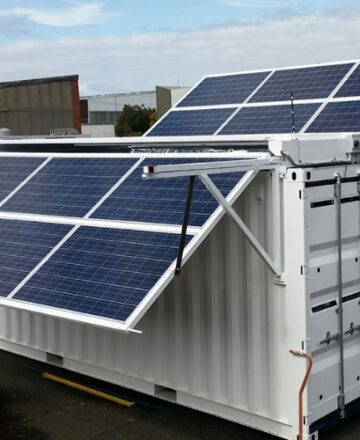
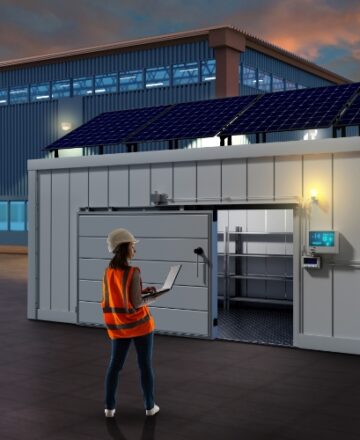
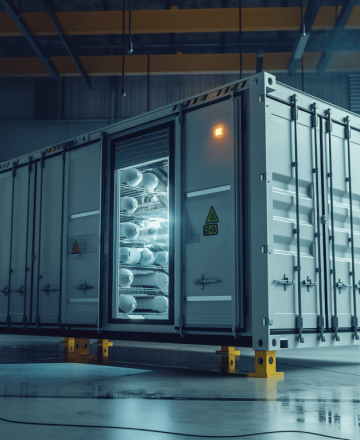
At Heuch, we call this approach Ice Batteries, because that’s what it is: a reliable way to “charge” cooling capacity when energy is available (especially solar), and “discharge” it when the shed needs it most.
Why glycol has become a pain point for many farms
Glycol systems work, but several producers raised familiar concerns:
In short: glycol isn’t “bad” technology, but it can be an expensive way to move cooling energy around a farm, particularly when the farm already has a free or low-cost energy source sitting on the roof.
Another consistent theme we heard: many farms already have solar, but they can’t always use it when it’s generated.
If the dairy’s main cooling demand is later in the day, overnight, or during peak operational windows, solar production and cooling demand don’t always match. So what happens?
Solar is exported back to the grid – often for a relatively low return – and the farm then buys energy back later at a higher effective cost to run critical refrigeration and cooling equipment.
That’s where ice-based cooling changes the conversation.
This means your cooling system can be powered by:
Instead of exporting solar for cents, you can use that solar to “charge” cooling capacity—then draw on it later to cool milk with a more stable energy load and reduced reliance on peak-priced power.
For many farms, that’s not just a technical advantage, it’s a commercial one.
Expanding farms need a cooling strategy, not just “more cooling”
A big driver coming out of the event was expansion. More farms are increasing production, adding capacity, upgrading sheds, or planning new infrastructure. That puts immediate focus on:
Ice-based systems can be a powerful tool here because they help decouple cooling production from cooling demand. Instead of building a system that has to meet every peak moment in real time, you can store cooling and smooth the load.
That can mean:
We met producers who still have ice banks in place, but they’re aging, undersized, or no longer fit for current operations. Others had removed them years ago and are now reconsidering because energy economics have shifted.
The key difference now is that modern ice-based cooling can be designed around:
In other words, it’s not nostalgia—it’s optimisation.
Our takeaway from the event was clear: dairy producers want reliability first, but they also want a smarter cost structure, especially as farms scale.
That’s exactly where Heuch sits in the market. We’re not trying to sell a one-size-fits-all box. We design cooling systems that match:
Whether you’re upgrading an older ice bank, expanding and needing additional capacity, or looking to reduce reliance on glycol, Heuch’s Ice Batteries are built for modern dairy operations—using a proven principle that fits today’s conditions better than ever.
Ice banks worked for decades because they made practical sense. Now, with solar becoming common on farms and energy costs refusing to stay predictable, storing cooling as ice is again one of the most logical ways to cool milk efficiently.
If your farm is expanding, your cooling system is due for an upgrade, or you’re tired of exporting solar for minimal return while paying to cool milk later, it may be time to put ice back to work.
At Heuch, We Cool Milk. Talk to our team about Ice Batteries for your site, and how to turn your solar into dependable milk cooling capacity.
📞 Call us today on 1300 001 952 or
📧 Email us at cool@heuch.com.au
 Share this product